Use observed exposure, access, water delivery, and project details to frame each decision.
Use observed exposure, access, water delivery, and project details to frame each decision.
Learn More →Turn the article into property observations, selection criteria, and a written boundary for work.
Learn More →Before design is priced, the site record identifies functional areas, planting limits, circulation, water delivery, and maintenance capacity.
Learn More →Water-system proposals show the inspected condition, repair boundaries, zone or controller changes, and any new work as distinct decisions.
Learn More →Property cleanup is defined by the material present, collection areas, bed tasks, removal responsibility, and a visible completion check.
Learn More →Commercial landscape scopes connect service frequency to site zones, operating hours, access requirements, and named approval responsibility.
Learn More →What belongs in a Phoenix landscaping estimate? Caliche excavation, drip-zone changes, desert-adapted planting, heat-tolerant hardscape materials, rock quantities, and equipment access should be documented for the property. Review the proposed water use and applicable municipal guidance alongside an itemized scope; a generic lawn-care figure cannot describe that work.
Valley homeowners have usually already met the crew that mows bermuda on a Midwest calendar and scalps it in the first week of June. What they want instead is people who work to the desert’s growing season, show up when they said they would, and are still there when the monsoon takes a tree down. That is the job Phoenix Pro Landscape does.
We’re a locally operated landscaping company serving Phoenix and the Maricopa County suburbs — Phoenix, Scottsdale, Tempe, Chandler, Gilbert, Mesa, Glendale, Goodyear, Ahwatukee, Surprise, Avondale, and Peoria. Same crew, same supervisor, same routes week after week. No call centers, no franchise rotation.
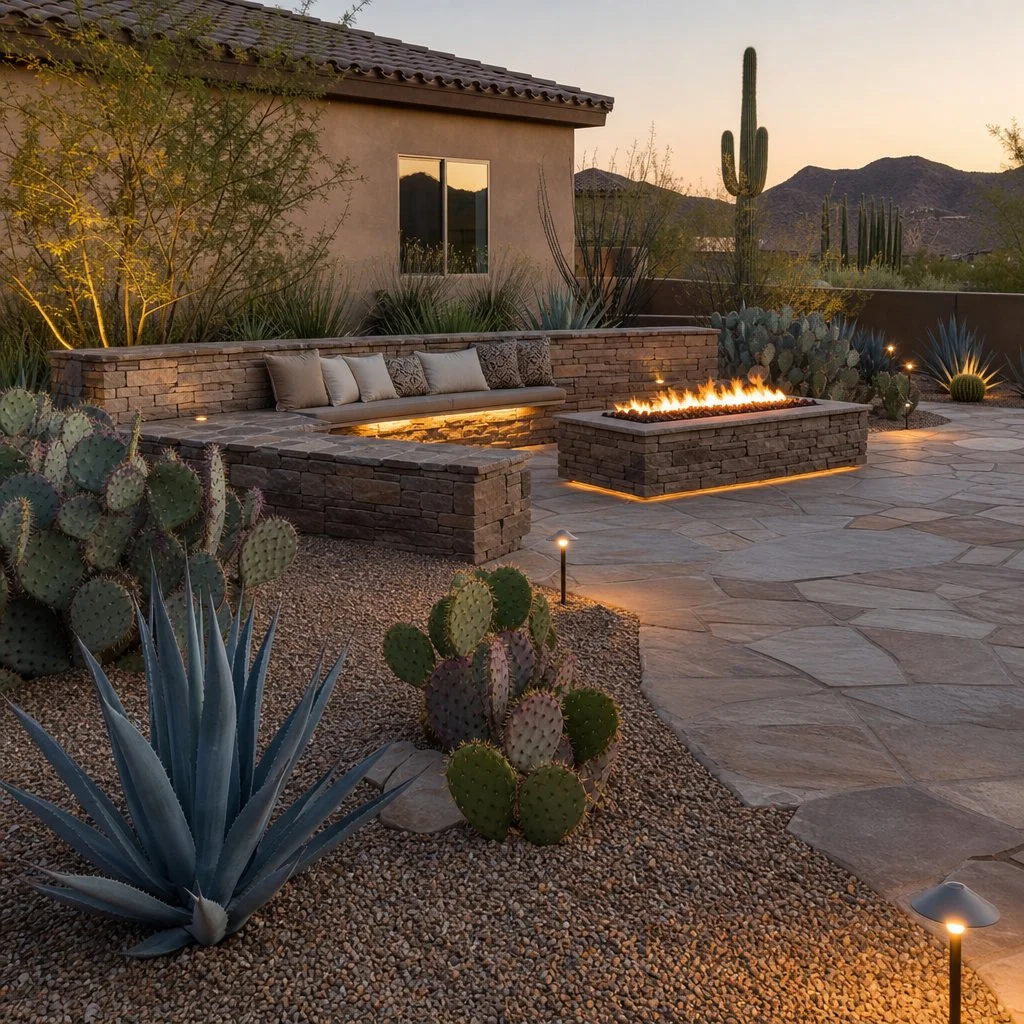
Every yard in the Phoenix metro sits on caliche and decomposed granite over hard-packed desert soil. Most turf areas are Bermuda, while a growing share of yards skip lawn entirely for xeriscape and desert-native plantings. Summers run brutally hot and dry, broken only by the July-to-September monsoon, so the real work happens in spring and fall. None of that gets handled correctly with a generic mowing playbook from out of state.
Field check 16 within property planning tests property detail 16 against measured conditions on the property. Separate the confirmed work from options that still await a selection.
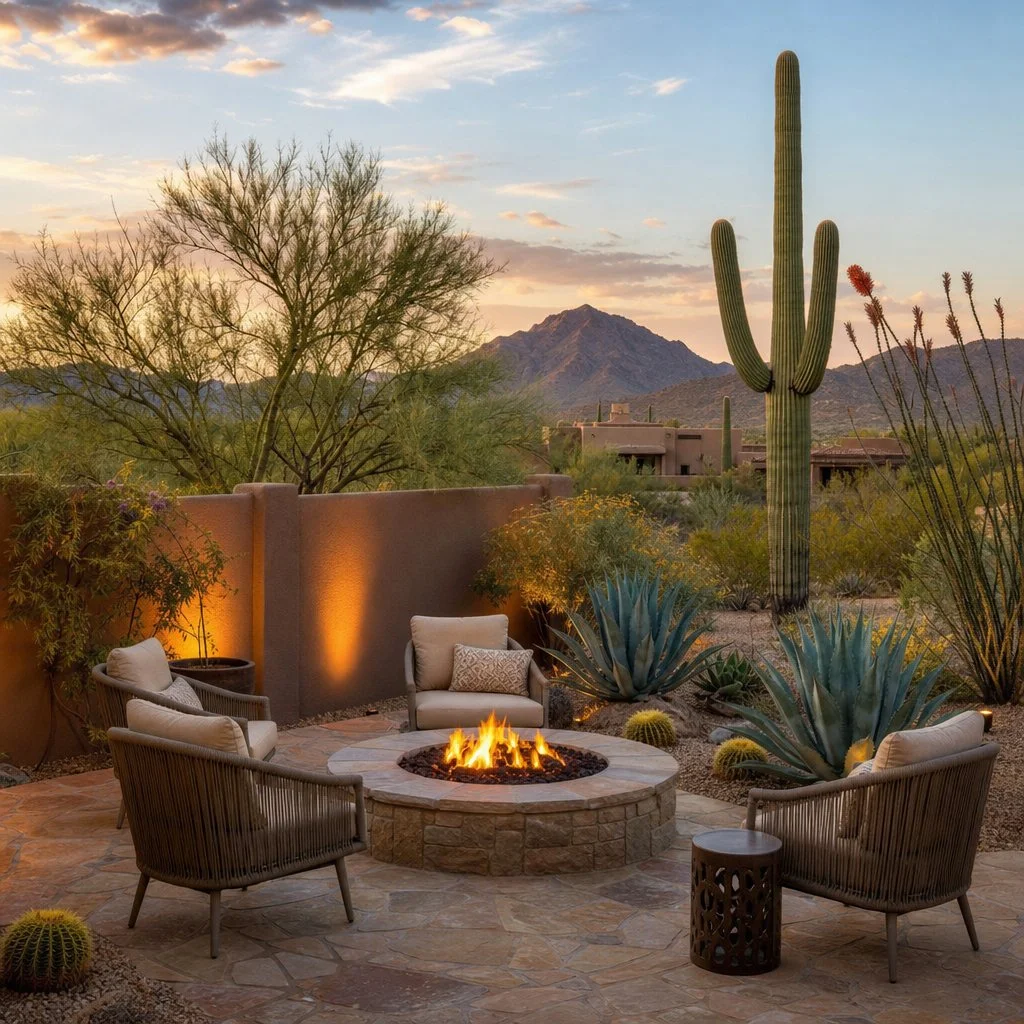
Phoenix sits in the low Sonoran Desert — where summer highs run well past 110 degrees and rain is scarce outside the monsoon. That’s why so many Phoenix yards are moving to xeriscape and desert landscaping. Bermuda is the workhorse turf: it laughs at summer heat and drought, then goes dormant and brown through the mild winter, when many homeowners overseed with perennial ryegrass for winter color. Get the wrong crew on a Bermuda lawn with the wrong cutting height in July and you scalp it down to bare runners in one pass.
Add the soil. Maricopa County caliche is a cement-hard calcium layer that water cannot soak through and roots cannot crack. Standard topsoil amendments don’t fix it. We work with it — proper grading, decomposed-granite top-dressing, and desert-native plant material that’s evolved for this exact soil profile.
And the heat. Phoenix’s extreme heat and sudden monsoon storms are the silent killers of poorly-installed hardscape and shallow-rooted plantings. Relentless UV and flash-flood downpours will heave a paver patio that wasn’t built on a proper compacted base. Most Phoenix metro landscapers cut corners on base prep. We don’t, because we have to come back to fix our own work.
You get the same crew each visit. We build routes by area and keep them stable, so the people working the property through the monsoon are the ones who were there in March. They already know the gate, the dog, and the strip of gravel you want kept clean.
The quote is the price. Mowing, trimming, edging, blowing down the hard surfaces and keeping the gravel and beds clean are all part of it, at one agreed rate. Nothing is billed per visit on top, and nothing gets described as extra once the crew is already at the property.
Clear scheduling. Quote requests are scheduled in the order received, and your visit date is confirmed with you when the job is booked.
Written estimate. Every job is quoted against a written estimate, so what is included is agreed before any work starts.
Most Phoenix landscaping companies bury the real number behind a layered quote. Sizing up the field first? Our review of the best landscaping companies in Phoenix ranks the Valley crews worth a call. Base rate plus fuel surcharge plus per-visit add-ons plus seasonal premium plus the line items they spring on you mid-job. We don’t do that. Our quote is a flat number that covers everything we’ll do at your property — mowing, edging, trimming, blow-off, bed maintenance — for the season.
Price a Phoenix mowing scope from actual turf dimensions, equipment access, trimming complexity, irrigation timing, cleanup needs, and service cadence. The Phoenix agreement should record those inputs and distinguish routine work from additions.
For hardscape, design and irrigation we put the scope in writing, with materials, labour and timing separated so nothing is buried in a single figure. You sign nothing until the plan is complete, and we do not charge to design it. We arrive at the consultation already expecting caliche, and already thinking about where the afternoon sun lands in July.
Want a number for maintenance, a hardscape project, or a desert conversion? Call (602) 782-5412 or start a quote request online.
Beyond Phoenix, our crews provide low-water desert landscaping across the Maricopa County suburbs:
No assigned watering days here, but the rules still matter. See the 2026 Phoenix watering rules & desert lawn calendar for what Stage 1 means and a month-by-month plan.
A Phoenix landscaper looks after yards that are mostly decomposed granite and desert plants: trimming, pulling weeds out of the rock, checking drip lines, blowing off hardscape, seasonal cleanups, and mowing the Bermuda that remains. The visit is built around drip and detail work, not a weekly lawn schedule.
Our lawn mowing page and leaf removal page show how a visit is itemized.
Routine desert-yard maintenance in Phoenix runs $45 to $95 per visit, and full-service monthly plans run $80 to $400 or more. A landscape design fee runs $300 to $2,500. Yard size, design density, rock and access move the number, so treat these as planning ranges, not quotes.
The complete table, last updated August 24, 2026, is on the Phoenix landscaping cost page.
A Phoenix landscape design maps the caliche first, because it decides where a tree can go, then plots afternoon shade and groups desert plants by water need so each drip zone feeds only what it needs. Arizona Cooperative Extension calls that hydrozoning. A plan on paper lets you compare bids on one scope.
Read more in the Phoenix landscape design page and the xeriscape versus grass guide.
Phoenix has no assigned watering day and no odd-even schedule in 2026. The city was under a Stage 1 Water Alert when we last checked its drought dashboard, and Chapter 37 of the city code covers water waste year-round. Runoff into the street or a broken head spraying the sidewalk can still draw attention.
Our Phoenix watering rules guide carries the last-verified date against the City of Phoenix.
Most everyday landscaping in Phoenix, including planting, mulching and rock, needs no permit. You do need one for fences and retaining walls over 3 feet, decks more than 30 inches above grade, shade structures over 200 square feet, and backflow prevention on irrigation. Confirm the current rule with the City.
The details are in our Phoenix landscaping permits guide.
Ask each company to put caliche excavation, drip-zone changes, desert planting, rock quantities, equipment access and debris handling in writing, with exclusions. A scope that names those items lets you compare bids line by line, which a single per-visit figure cannot do for a desert property.
Start with the hiring checklist, the Phoenix landscaping companies comparison, or the free quote page.
Photographs and measurements of decorative rock, caliche areas, drip zones, heat-exposed plants, hardscape, and equipment access give a Phoenix request its working facts. Any bidder can then state the included assets, water-use assumptions, exclusions, and proposed price in a comparable document.
After you share the Phoenix address and requested work, the selected provider reviews service-area fit and current scheduling. The estimate appointment is confirmed only after that review; no response or appointment time is promised in advance.
A Phoenix project record can distinguish installed rock quantities, drip emitters, caliche excavation, plant placement, and heat-exposed hardscape. Check the property against those listed components and document discrepancies rather than relying on a generic completion promise.
The proposal should identify the Phoenix property, approved work, exclusions, and price. Compare completed work with that document and raise any specific difference with the selected provider before final acceptance.
List the decisions that must occur in order and connect each one to its required measurement, inspection or owner selection. The landscaping schedule should not advance past a dependency that remains unverified.
Create a separate record whenever conditions, access or intended use differ within the property. Attach quantities and actions to that zone so one broad recommendation is not applied to unlike areas.
Use measurements, labeled photos, selected specifications and written exclusions. The proposal should show why each action belongs and distinguish observed evidence from a condition still awaiting inspection.
Document the affected area, current condition, desired result, and decisions that remain open.