
Quick answer: Glendale landscaping is West Valley Sonoran Desert work: xeriscape and decomposed-granite designs, drip irrigation, desert plants, and durable hardscape for older central neighborhoods and newer Arrowhead-area subdivisions alike. We design, install, and maintain low-water desert landscapes across Glendale’s 85301-85310 zips in Maricopa County, built for extreme heat and the summer monsoon. Free written estimates: (602) 782-5412.
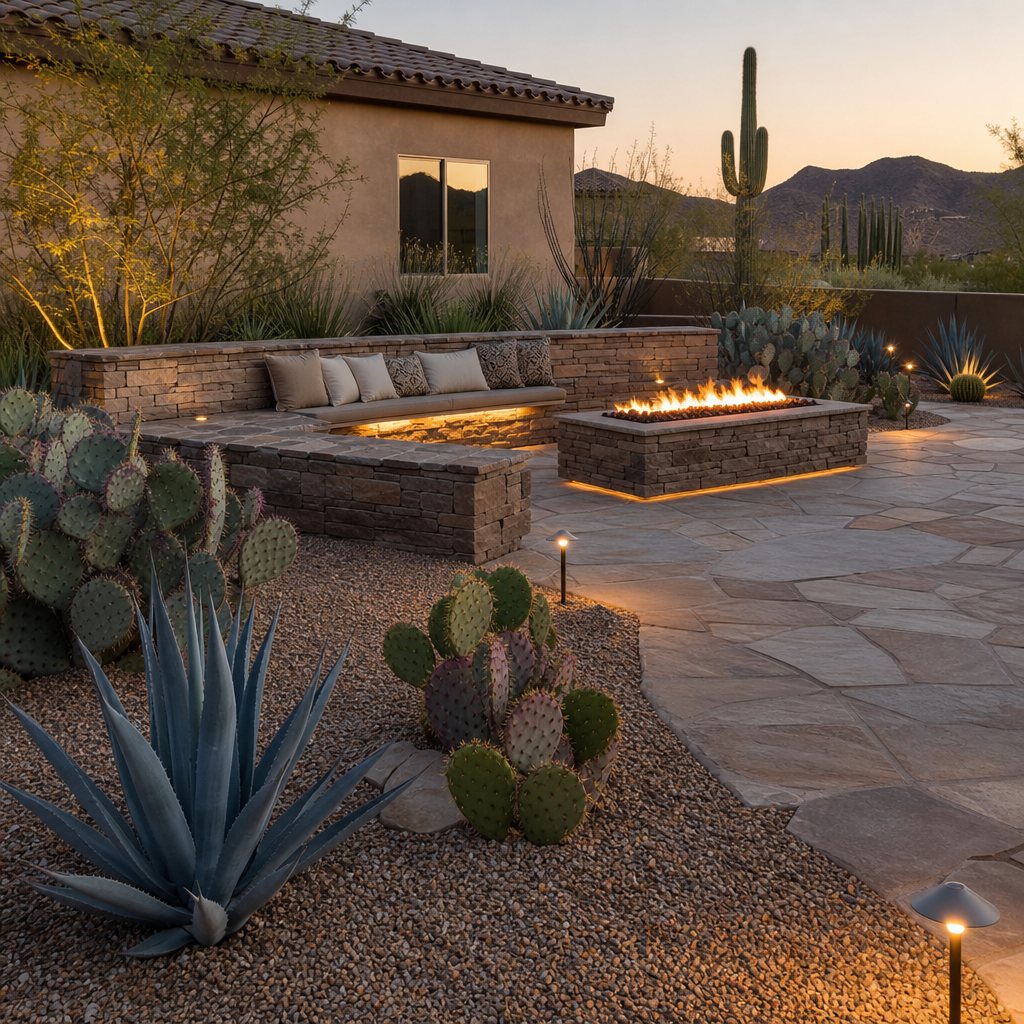
West Valley Desert Landscaping in Glendale
Glendale anchors the West Valley, mixing older established neighborhoods near downtown and the sports and entertainment district with newer master-planned communities up toward Arrowhead. Both sit in the Sonoran Desert, so the right landscaping is a low-water desert design: decomposed granite, desert-adapted plants, and efficient drip irrigation, whether we are renovating an older yard or building a new one.
We design and install desert landscapes across Glendale’s 85301 through 85310 zips, from the historic downtown and stadium area to the Arrowhead Ranch communities.
Decomposed Granite, Hardscape, and Renovation
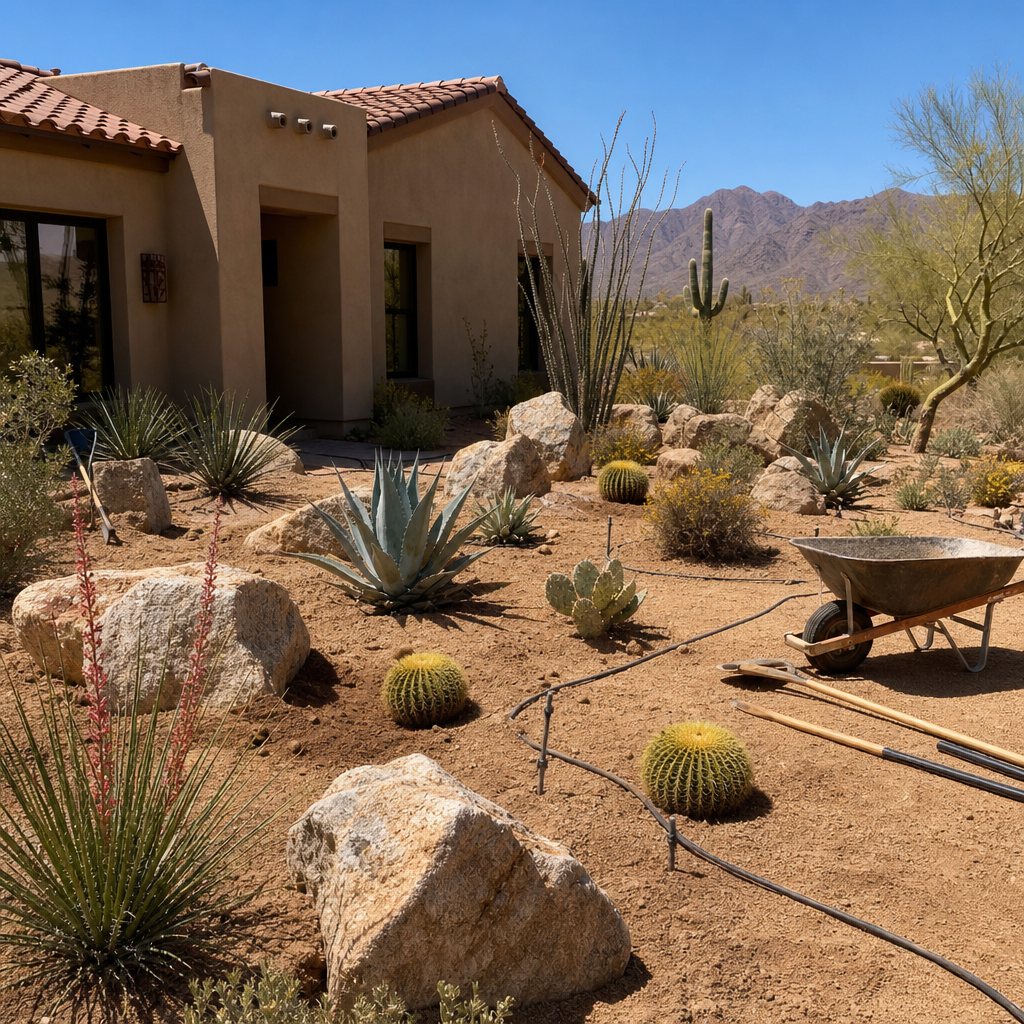
On older Glendale lots, much of the work is converting tired or thirsty yards to low-water desert: removing old turf, grading and installing decomposed granite (DG) with edging and weed barrier, and adding desert plantings and hardscape. On newer Arrowhead lots we build fresh desert designs with paver patios, seat walls, and fire features.
Heat-rated artificial turf is a common Glendale choice for a green patch in a backyard without the water of natural grass.
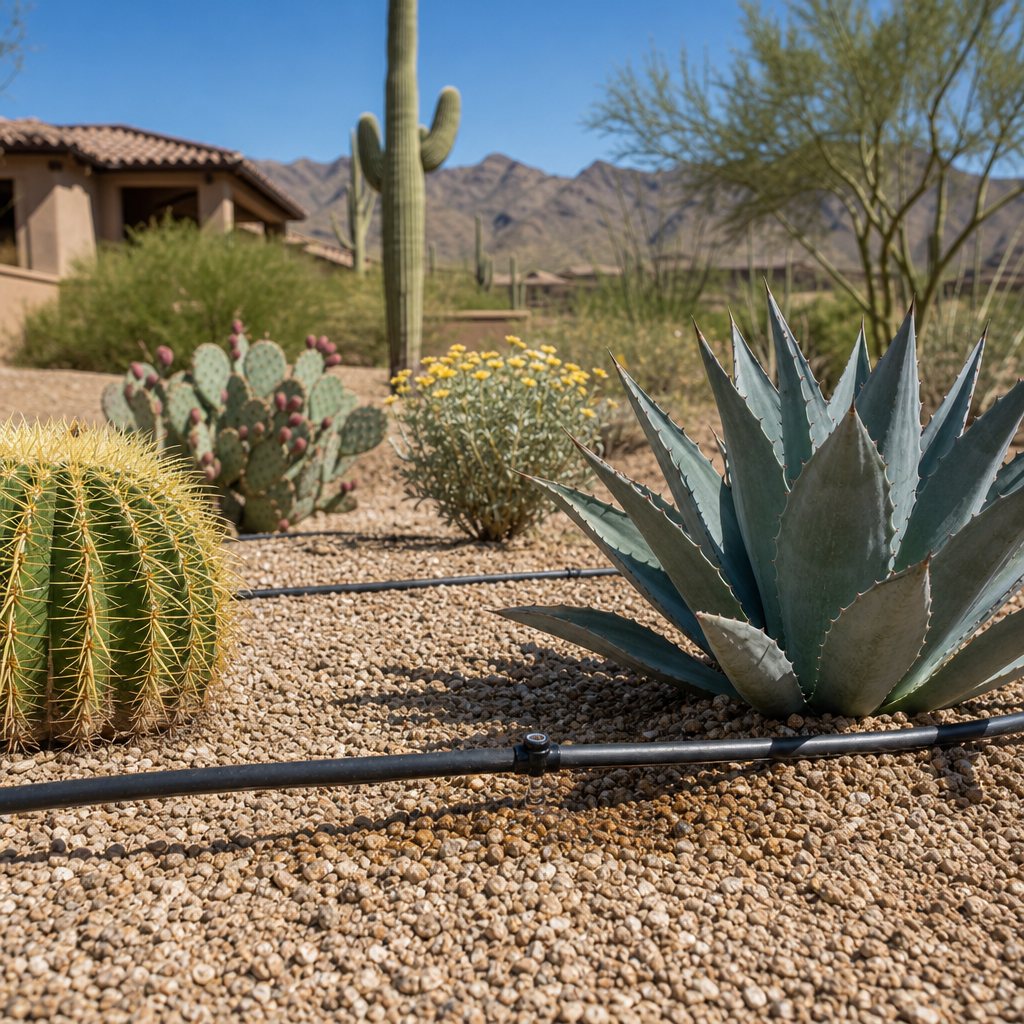
Desert Plants and Drip Irrigation
We plant desert-adapted species suited to the West Valley: palo verde, mesquite, and desert willow for shade; agave, ocotillo, and barrel cactus for structure; and lantana, red yucca, and brittlebush for color. All run on drip irrigation, because deep, infrequent drip is how desert plants establish and survive Glendale summers, keeping water on the roots instead of the granite.
We program drip by season following Arizona desert watering guidance, heavier in summer and minimal in winter.
Monsoon, Heat, and the Glendale Areas We Serve
Glendale landscape care is driven by extreme heat and the July-to-September monsoon. We plant in the fall so roots establish before summer and prune and stake desert trees against monsoon microbursts. We serve all of Glendale and the adjacent Peoria, Phoenix, and Sun City communities.
Frequently Asked Questions
Can you convert my old Glendale lawn to desert landscaping?
Yes, that is much of our West Valley work. We remove tired or thirsty turf, grade and install decomposed granite with edging and weed barrier, and add desert plantings and hardscape, cutting water use while giving the yard a clean, finished desert look.
Should I have grass or desert landscaping in Glendale?
For most Glendale yards a low-water desert design is the right call. Natural turf is costly to water through extreme summers and is under conservation pressure in Maricopa County. We build with decomposed granite, desert plants, and drip, and use heat-rated artificial turf for a green patch.
Which desert plants work best in Glendale?
Palo verde, mesquite, and desert willow for shade; agave, ocotillo, and barrel cactus for structure; and lantana, red yucca, and brittlebush for color. All are desert-adapted and run on drip irrigation to survive the West Valley heat.
How often should a Glendale desert landscape be watered?
Deep, infrequent drip, not a daily turf cycle: more in summer, very little in winter, following Arizona desert watering guidance. We program the drip controller by season so water reaches the roots, not the hot granite.
What does desert landscaping cost in Glendale?
It depends on yard size, whether it is a conversion or new build, the decomposed granite and hardscape involved, and the plant and drip plan. Every Glendale property is quoted individually with a free written estimate. Call (602) 782-5412 to schedule.
Our Services in Glendale
What is desert landscaping in Glendale and the greater Phoenix area?
Desert landscaping means layered desert-adapted trees, shrubs and accents on drip irrigation over decomposed granite, arranged so the yard looks intentional in every season. It is not gravel and a lonely cactus. Plants are grouped by water need, which Arizona Cooperative Extension calls hydrozoning, so each zone gets only what it needs.
The xeriscape versus grass guide compares the two choices in detail.
How much does desert landscaping cost around Phoenix?
On our 2026 cost page, decomposed granite installs at $1.50 to $4 per square foot and a full desert landscape install runs $5 to $15 per square foot. Design density, rock quantities and access move the figure, so treat these as planning ranges and get a written scope before you compare bids.
The full table is on the Phoenix landscaping cost page.
How should you water a desert landscape in Phoenix?
Water deeply and infrequently, then adjust by season. That is the city’s own guidance under its Landscape Watering by the Numbers program. Desert soil and desert plants do best on a long soak followed by a real drying-out, and runoff into the street is the thing the water-waste rules target.
See the Phoenix watering rules guide for the last-verified date.
Is a desert yard better than grass for a Glendale home?
For most of the yard, yes. Water is the whole argument in the Sonoran Desert, where summers push past 110 degrees. Grass works best as a deliberate exception: small, sunny, with six hours or more of sun for Bermuda, and a lawn you genuinely use. The rest does well on drip.
When you are ready to plan a layout, see Phoenix landscape design or the free quote page.