
Field condition: What belongs in a Phoenix commercial grounds specification?
Desert properties require explicit rock coverage, drip zones, caliche excavation allowances, heat-exposed plant choices, and water-use controls. Phoenix decision makers can compare bids accurately when each of those assets and maintenance tasks is quantified.
Phoenix Pro Landscape handles commercial landscaping in Phoenix for apartment communities, HOAs, retail centers and offices. Published 2026 figures for the Valley put small sites at $500 to $1,500 a month and mid-size sites at $1,500 to $4,000. Call for a walk-through, and you’ll get a written scope and a monthly price for your property.
Call (602) 782-5412 or request a free quote. Tell us the property type, the rough acreage, and whether there’s turf, and we’ll set a time to walk it with you or your board.
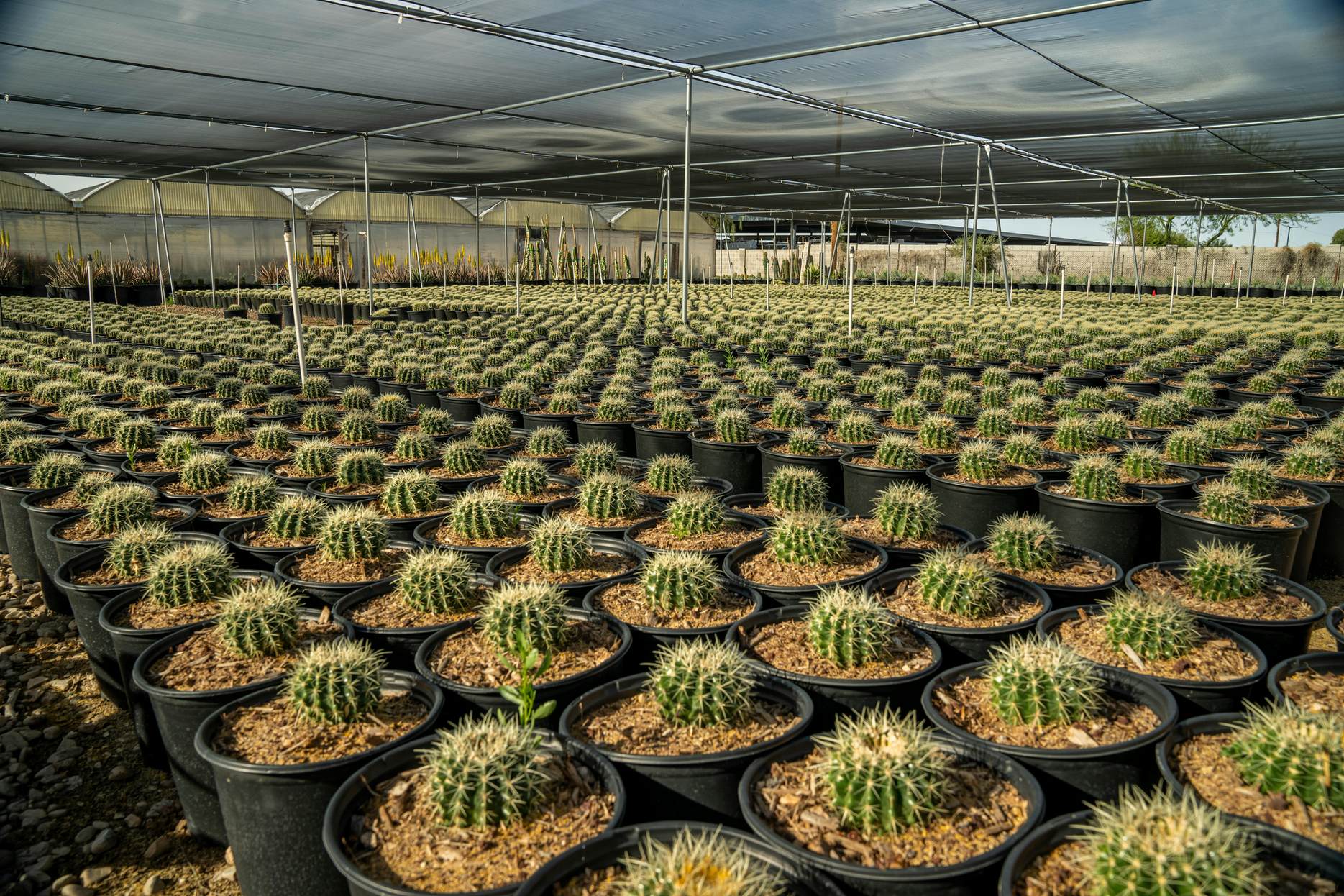
How much does commercial landscaping cost in Phoenix?
We don’t publish a commercial rate card, because two sites of the same size can be very different jobs. As a planning reference, published 2026 Phoenix figures put small commercial properties at $500 to $1,500 a month, mid-size properties at $1,500 to $4,000, and large HOA or apartment communities from $4,000 up.
| Property | Published Phoenix range, monthly maintenance |
|---|---|
| Small commercial (retail pad, medical office, strip center) | $500 to $1,500 |
| Mid-size (business park, church, school, mid-size apartments) | $1,500 to $4,000 |
| Small apartment complex | $1,500 to $4,000 |
| Smaller HOA community | $2,000 to $5,000 |
| Large HOA or apartment community | $4,000 to $15,000 and up |
Those bands come from a published local pricing guide, not from our own invoices, so treat them as a way to sanity-check a proposal. Your number comes from the walk-through. Here’s what moves it:
- Turf. Grass means weekly mowing in the growing season and the most water. A gravel-and-drip site needs far fewer hours.
- Irrigation age. An old system with mixed zones eats repair time. Many Phoenix contracts price irrigation repairs separately from the monthly fee, and ours spells out which is which.
- Tree count. Mature trees mean pruning before monsoon and cleanup after it.
- Visit frequency. Weekly, every two weeks or monthly, by area.
- Standards. A retail frontage on a busy street is held to a tighter standard than the back lot.
For one-time work on a commercial site, our published per-unit prices apply: drip repairs and emitter service $100 to $400, a smart controller upgrade $200 to $500, desert tree trimming $200 to $600 per tree, decomposed granite $1.50 to $4 per square foot installed. The full list is in our Phoenix landscaping cost guide.
What does a commercial maintenance scope include?
A commercial scope is a written list of what gets done, where, and how often. For most Valley properties that’s desert-plant trimming, weed control in the gravel, mowing and edging where there’s turf, irrigation checks, litter and debris pickup, and blowing off walks and parking edges. Seasonal work and storm response are listed separately.
- Every visit: trim and shape desert plants, pull or treat weeds in the granite, pick up litter and fallen debris, clear walks, entries and curb lines.
- Turf areas: mow, edge and check coverage. Weekly in the growing season.
- Irrigation: walk the drip lines for cracks and missing emitters, look for wet ground around valve boxes and backflow preventers, report and price anything broken.
- Four times a year at minimum: reset the controllers for the season.
- Late spring: structural pruning and thinning ahead of monsoon.
- Monsoon season: storm cleanup, basins reshaped, gravel raked back.
- As quoted: plant replacement, granite top-ups, hardscape repairs, design for renovations.
What does commercial landscaping for apartments in Phoenix involve?
Apartment communities are high-traffic sites, so the scope leans toward durability and fast fixes. That means turf that gets walked on daily, pet areas, pool surrounds, entries that leasing staff show every day, and irrigation that takes more abuse than it would at an office. Work gets scheduled around residents, not around us.
- Noise and access. Mowing and blowing happen in agreed windows, and the property manager gets notice before loud or disruptive work so residents can be told.
- Irrigation damage. Heads and emitters near walks, parking and pet areas get broken more often. A broken head spraying a sidewalk is also a water-waste issue under Chapter 37 of the Phoenix City Code, so those get fixed first.
- Turf decisions. Courtyard grass that nobody uses is some of the most expensive square footage on the property to keep alive. The city will pay to convert it, which is covered below.
- Budget band. Published Phoenix figures put small apartment complexes at $1,500 to $4,000 a month.
What do HOA boards need from a landscape contract?
Boards need a scope they can read, a price that’s clear about what’s included, and a straight answer on water. In Phoenix, the city says up to 70 percent of the water residents use goes to outdoor watering, so the common-area water bill is usually where a board’s real savings are, more than in the maintenance fee itself.
The City of Phoenix runs a free HOA Water Efficiency Program worth knowing about. Participating HOAs get a landscape water budget that compares what the community uses against what the landscape needs, the cost difference, and a meeting with Water Conservation staff to review it. We’ll work from that budget if your community has one, and we’d encourage a board that doesn’t to request it. It’s also a requirement for the city’s grass removal incentive.
In master-planned communities around Scottsdale, Gilbert and Chandler, the HOA’s own desert-landscape standards often dictate approved plants, granite color and upkeep. Send us the design guidelines with the quote request and the scope gets written to match them.
What do retail centers and office properties need?
Visibility and timing. On a retail or office site the landscape is the first thing a customer or tenant sees, so entries, monument signs and street frontage get the most attention. The work itself has to stay out of the way: mowing, blowing and pruning are scheduled around business hours and parking demand.
- Parking islands and curb lines. They collect litter, pods and storm debris faster than any bed on the property, and they’re what a visitor walks past first.
- Entries and walks. Kept clear of overgrowth and anything thorny. More on plant choice near walkways below.
- Shade. Desert trees over walks and parking make a site usable in summer. They also need thinning before storm season so they aren’t carrying a full sail of canopy into the wind.
- Small sites. Medical offices, restaurants and churches often need only a visit every two weeks plus seasonal cleanup. The scope is sized to the property, not to a minimum.
What does our commercial landscaping process look like, step by step?
It runs in seven steps: walk-through, written scope and price, a start-up visit, recurring service, seasonal controller changes, storm response, and a scope review. You decide the standards and the budget in the first two. After that you should mostly hear from us when something needs a decision.
- Walk-through. We walk the property with the manager or a board representative, map turf, beds, trees and irrigation zones, and note what’s failing. You tell us which areas matter most. Typically 30 to 60 minutes, by property size.
- Written scope and price. A proposal with a monthly price, visit frequency by area, what’s included, and what’s billed separately. You choose the service level. Typically within a week of the walk-through.
- Start-up visit. The first visits are a reset: every irrigation zone run and checked, a catch-up cleanup, and a marked-up site map of valves and controllers. Phoenix Water Services recommends keeping an as-built diagram like that near the timer.
- Recurring service. Visits on the agreed schedule. Weekly where there’s turf in the growing season. Desert-only sites are often serviced every two weeks or monthly.
- Seasonal controller changes. The Arizona Municipal Water Users Association advises adjusting irrigation schedules at least four times a year. We reset at spring warm-up, early summer, monsoon and fall.
- Storm response. After a monsoon storm, the site gets checked for downed limbs, blocked walks and washed-out gravel. Cleanup beyond the routine visit is quoted before it’s done.
- Scope review. Once or twice a year we go back through the scope with you: what’s costing the most water or labor, and whether a conversion or a controller upgrade would pay for itself. You decide.
How should a commercial property be watered in Phoenix?
Deep, infrequent, early in the morning, and on a schedule that changes with the season. Phoenix doesn’t assign watering days, but water waste is enforceable year-round. The usual failure on a commercial property isn’t a rule violation. It’s a controller nobody has touched since it was installed.
The spread between plant types is the reason. The water users association’s July guidance for established plants is roughly every 3 to 4 days for summer grass, every 13 days for desert-adapted shrubs, every 17 days for desert-adapted trees, and every 21 days for cacti. Any zone that mixes those can’t be right at any setting, so on older sites the first fix is often separating turf from desert planting onto different valves. Our irrigation page covers that work.
- Turf is best watered between about 1 a.m. and 7 a.m. in the hot months.
- Running water into the street, watering pavement, or leaving a broken head spraying the sidewalk can draw enforcement under Chapter 37 of the city code regardless of drought stage.
- At our last check the city was in a Stage 1 Water Alert: voluntary conservation, no mandatory cutbacks. Our Phoenix watering restrictions page tracks the current stage.
- Backflow prevention assemblies are required on irrigation systems regardless of size, and Phoenix Water Services says parts on a backflow preventer should only be replaced by a qualified professional.
Will the City of Phoenix pay to remove grass at a commercial property?
Yes. Phoenix Water Services pays non-residential customers $2 per square foot to convert grass to low-water desert landscaping. HOA and multifamily common areas, commercial properties, industrial sites and schools qualify. At least 1,000 square feet has to come out, and nothing can be removed before the city issues a Notice to Proceed.
The requirements are stricter than the residential program, and they shape the project:
- The applicant must be in the city’s Business or HOA Water Efficiency program.
- The applicant is the property owner or the HOA board president. A property manager or committee member can apply with written permission.
- A landscape plan by an Arizona registered landscape architect has to be submitted to the Planning and Development Department, and the approved plan and permits are part of the paperwork.
- The finished irrigation must be an automatic, permanent drip system.
- The grass has to be alive and in place when you apply. Funds are first come, first served, and the city notes the guidelines can change.
The city’s own figure is that choosing desert plants can cut outdoor water use by 85 percent. We can price the conversion and build to the approved plan. The application and the architect’s plan belong to the owner or board.
Should a commercial property overseed with winter rye?
Only where the green earns its keep. The Arizona Municipal Water Users Association estimates overseeding takes about 8,000 gallons of water per 1,000 square feet for the season, against roughly 500 gallons for a dormant Bermuda lawn. On an acre of common-area turf, that’s a large line on the winter water bill.
The practical answer for most properties is to split it. Overseed the turf people actually see and use, like an entry, a leasing-office lawn or a play area, and let the rest go dormant and golden until spring. That decision gets made in September, before seed goes down, and it’s written into the scope so nobody is surprised by a brown lawn in January.
Which plants hold up on a Phoenix commercial property?
Desert-adapted ones. Agave, golden barrel, desert spoon, ocotillo and lantana, with palo verde, mesquite and desert willow for shade, thrive on little water once they’re established. On a commercial site the second question is placement, because some of the toughest trees are also the messiest or the thorniest near a walkway.
- Thorns. University of Arizona Cooperative Extension notes that the short thorns on blue palo verde can be a problem near walkways, and that Chilean mesquite carries spines up to 2 inches long, which may limit its use in high-traffic areas.
- Litter. The same publication describes palo verde flowers and seed pods as heavy litter. Fine over gravel, a daily sweeping job over an entry walk.
- Saguaros. They’re protected, so removal or relocation takes care and sometimes a permit.
- Planting windows. Fall and early spring. A replacement planted at the start of summer needs water every one to two days for its first two weeks, with no margin if an emitter clogs.
How do you get a commercial property ready for monsoon?
The work happens in late spring, before the first storm. Trees get structural pruning and thinning to cut wind-loading, since summer storms snap limbs and can topple shallow-rooted trees. Drainage paths and basins get cleared. The city dates monsoon from June 15 to September 30 and warns that storms and flooding can strike quickly.
After a storm the order is safety first: walks, entries and drive lanes cleared, then limbs cut and hauled, then gravel raked back and basins reshaped so the next irrigation cycle soaks in where it should. For budgeting, our published tree prices are $200 to $600 to trim a desert tree and $600 to $1,500 for a large or multi-trunk tree. Storm cleanup beyond the routine visit is quoted before it starts.
What does a typical commercial scope look like?
Here are four typical scopes. They’re illustrations of how a scope and a budget band fit together, not write-ups of particular clients, and the monthly bands are the published Phoenix ranges from the table above. Your proposal is written from your own property after a walk-through, with its own price.
- Retail pad or small office, desert landscaping. Gravel beds, a dozen shrubs and a few trees on drip, no turf. Visits every two weeks, controller resets four times a year, pre-monsoon pruning. Published band: $500 to $1,500 a month.
- Mid-size apartment community. Turf courtyards, a pool area, a pet area, entry beds and parking islands. Weekly visits in the growing season, irrigation walk each month, resident-notice windows for loud work. Published band: $1,500 to $4,000 a month.
- Smaller HOA, entries and common areas. Monument entries, a greenbelt, a retention basin and street-side gravel. Visit frequency by area, a split overseeding plan, storm response in season. Published band: $2,000 to $5,000 a month.
- One-time turf conversion, 2,000 square feet. At our published $5 to $20 per square foot for a desert landscape install, that’s $10,000 to $40,000 depending on plant density and boulders. If the city approves it, the $2 per square foot incentive returns $4,000.
How does the Phoenix calendar change the work through the year?
The work follows heat and storms, not the four seasons on a wall calendar. Spring is for irrigation checks and pruning. Summer is the stress test. Monsoon, which the city dates June 15 through September 30, is storm response. Fall is for planting and the overseeding decision. Winter is for renovation.
| Season | What happens on site |
|---|---|
| Spring (March to May) | Step watering up gradually as nights warm. Run and walk every irrigation zone before the heat. Structural pruning in late spring, ahead of the storms. |
| Early summer (June) | The tightest watering intervals of the year. Crews start early and stay out of the worst afternoons. |
| Monsoon (June 15 to September 30) | Storms peak mid-July to mid-August. Clear limbs and debris, reshape basins, rake gravel back, and shut irrigation off after a real rain. |
| Fall (September to November) | Overseeding decision. Best planting window for desert-adapted trees and shrubs. |
| Winter (December to February) | Cut irrigation frequency sharply. Good months for renovation, granite and hardscape work. |
Our Phoenix landscaping calendar has the watering intervals behind that table.
What are the dust and debris rules for commercial sites?
Two matter. Maricopa County Air Quality restricts leaf blower use on government property during High Pollution Advisories and asks everyone else to avoid blowing on those days, naming a rake or broom as the best alternative. And the City of Phoenix treats yard waste as a stormwater pollutant, so debris never goes to the gutter.
In practice that means parking lots and curb lines get swept or blown toward the property, not into the street, and green waste is hauled off site. The county also prohibits burning yard waste, including tree trimmings. Seed pods, fronds and storm debris are the bulk of what comes off a Phoenix commercial site, and our leaf removal page explains when each one falls.
Which property types and areas do you serve?
We serve apartment and condo communities, HOA common areas, retail centers, offices, medical offices, restaurants and churches across Phoenix, Scottsdale, Tempe, Mesa, Chandler, Gilbert, Glendale, Peoria and Surprise. City programs and codes on this page are City of Phoenix rules. Properties in other Valley cities fall under that city’s own water and code offices.
The full coverage list is on our areas we serve page.
Can one contract cover mowing, irrigation and improvements?
Yes, and it usually should. A single scope can cover lawn mowing, irrigation checks and repairs, seasonal debris cleanup, and improvement work like hardscaping or a landscape redesign. You get one point of contact and one monthly invoice, with project work quoted separately in writing.
Ready to have the property walked? Call (602) 782-5412 or request a free quote. Tell us the property type and size, and bring the current scope if you have one.
What is commercial landscape maintenance in Phoenix?
Commercial landscape maintenance is a recurring, written scope for a business property: trimming, weed control, irrigation checks, litter pickup and seasonal work. In the Valley that scope is built around desert plants and drip lines, with turf mowed weekly in the growing season only where grass exists.
Budget bands and the walk-through process are laid out above, and the Phoenix landscaping cost guide lists the per-unit prices for one-time work.
How do I choose a commercial landscape maintenance company in Phoenix?
Ask each bidder for a written scope that lists visit frequency by area, what is included, and what is billed separately, such as irrigation repairs. Compare two or three proposals line by line. Walk the property with every bidder, because a price quoted without seeing turf, trees and zones is a guess.
If you want a proposal on your own property, send the details through the free quote form.
How often should a commercial property in Phoenix be serviced?
Weekly where there is turf in the growing season, and every two weeks or monthly on desert-only sites. Retail frontage and apartment entries usually get more visits than back lots. The written scope sets frequency by area, so an entry can be held to a tighter standard than a service yard.
Who handles irrigation repairs on a Phoenix commercial maintenance contract?
Many Phoenix contracts price irrigation repairs separately from the monthly fee, so the proposal should say which is which. Routine checks of drip lines, valve boxes and backflow assemblies belong in the monthly scope. Anything broken is reported and priced before it is fixed, and heads spraying pavement come first.
The planning side of irrigation, including permits and licensing, is on our Phoenix irrigation page.
What does commercial landscape renovation involve in Phoenix?
Renovation replaces the failing parts of a site: turf converted to desert planting, irrigation zones separated by plant type, and worn granite topped up. The order matters. Walk the property, agree a written scope and price, then finish any city incentive paperwork before turf comes out, because early removal can disqualify the rebate.
Design questions for a renovation are covered on our landscape design page, and the city turf-removal rules are summarized above.
What field evidence supports a property decision on Commercial Landscaping?
Phoenix commercial landscapes call for an asset list covering decorative rock, drip circuits, caliche areas, desert-adapted plants, heat-exposed hardscape, and water controls. Bids become comparable when those components carry explicit maintenance duties and exclusions.
“Our Phoenix crew runs Commercial Landscaping across Maricopa County every week. Same teams, same schedule, same standard.”— Phoenix Pro Landscape Operations Team
- Professionally managed local crews on dedicated weekly routes
- Serving multiple Maricopa County suburbs on fixed route schedules
- Operator-grade scheduling and reporting
- Free written estimates on every job